eSIM supported tablets
06/07/2026
Tablets with eSIM support are becoming essential tools for travelers, remote workers, and anyone who needs reliable mobile data without the hassle of physical SIM cards. Unlike traditional SIM slots, eSIM technology allows you to switch carriers, activate plans, and manage multiple profiles directly from your device’s settings. This flexibility is particularly valuable for those who frequently cross borders or need instant connectivity in areas where local SIMs are difficult to obtain. With more manufacturers integrating eSIM into their tablets, the options for seamless digital mobility are expanding. Whether you’re using a tablet for work, streaming, or navigation, eSIM support ensures you stay connected without interruptions.
Why eSIM Tablets Are a Game Changer for Travelers
For frequent travelers, eSIM tablets eliminate the need to hunt for local SIM cards or deal with roaming charges. Instead of visiting a store or waiting for a physical SIM to arrive, you can purchase and activate a data plan from a global provider like Airalo, Holafly, or Nomad with just a few taps. This is especially useful in countries where buying a local SIM requires registration or where English support is limited. For example, if you land in Japan, you can instantly switch to a local eSIM plan without leaving the airport. Many eSIM providers offer short-term plans tailored for travelers, such as 7-day or 30-day packages with generous data allowances. This convenience extends to business trips, where time spent setting up connectivity can mean lost productivity.
Google Fi now supports data-only eSIM for tablets and laptops.
Nathan Drescher, Tech journalist — androidpolice.com
Another advantage is the ability to store multiple eSIM profiles on a single device. You can keep your home carrier’s plan active while adding a local or regional eSIM for better rates. This dual-profile setup is ideal for digital nomads who split their time between countries or need separate lines for work and personal use. Some tablets, like the iPad Pro, allow you to label each profile for easy switching. For instance, you might have one profile for your U.S. number and another for a European data plan, toggling between them as needed. This flexibility reduces the risk of missing important calls or messages while abroad.
Top eSIM-Supported Tablets in 2024
The market for eSIM tablets is growing, but not all models offer the same level of support. Apple’s iPad lineup leads the pack, with the iPad Air, iPad Pro, and iPad mini all featuring eSIM capabilities. These devices support both eSIM and physical SIM cards, giving users the option to use either or both simultaneously. The iPad Pro, in particular, is popular among professionals for its processing power and compatibility with Apple’s ecosystem. Samsung’s Galaxy Tab S series also includes eSIM support, though availability varies by region. For example, the Tab S9+ and Tab S9 Ultra offer eSIM in select markets, while older models like the Tab S8 require a physical SIM.
Outside the premium segment, brands like Ulefone are making eSIM more accessible. The Ulefone Tab A9 and Tab A10, announced in early 2024, are budget-friendly tablets with eSIM support, making them appealing for travelers who don’t want to invest in high-end hardware. These devices also include features like 4G LTE connectivity and long battery life, which are critical for users who rely on mobile data. Other manufacturers, such as Lenovo and Huawei, have been slower to adopt eSIM, but this may change as demand increases. When choosing a tablet, it’s important to verify eSIM compatibility with your carrier, as some models are locked to specific networks.
How to Set Up and Use an eSIM on Your Tablet
Setting up an eSIM on a tablet is straightforward, but the process varies slightly depending on the operating system. For iPads, you can add an eSIM by going to Settings, selecting Cellular Data, and tapping Add Cellular Plan. From there, you can either scan a QR code provided by your carrier or enter the details manually. Apple also allows you to purchase eSIM plans directly from the Settings app through its built-in eSIM store, which partners with providers like GigSky and Airalo. This feature is particularly useful for last-minute travelers who need a plan quickly. Once activated, you can switch between profiles or adjust data settings without restarting the device.
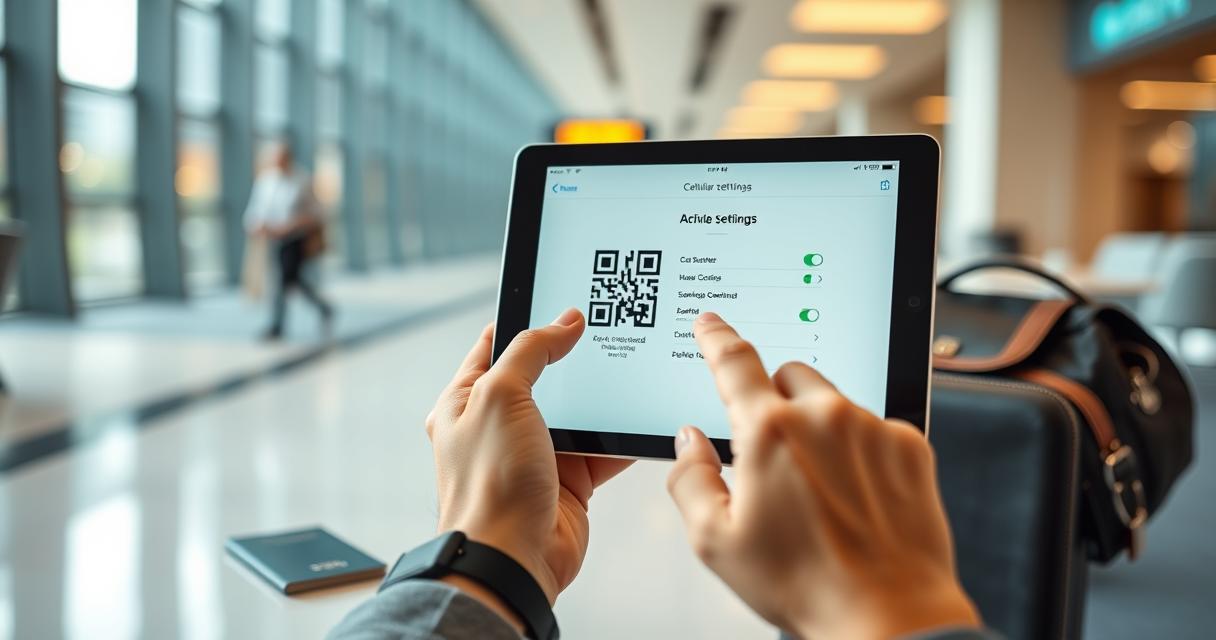
On Android tablets, the process is similar but may require additional steps. For Samsung devices, you’ll find the eSIM setup under Connections in the Settings menu. Some carriers, like Google Fi, offer automatic eSIM activation, where the plan is pushed to your device as soon as you sign up. However, not all Android tablets support eSIM, so it’s essential to check your device’s specifications before purchasing a plan. For example, the Galaxy Tab S9 supports eSIM, but the Tab S6 Lite does not. If you’re using a third-party eSIM provider, you’ll typically receive a QR code via email, which you can scan during setup. Keep in mind that some carriers require you to download their app to manage your plan, which can be an extra step for users who prefer simplicity.
eSIM vs. Physical SIM: Which Is Better for Tablets
While eSIMs offer convenience, physical SIM cards still have their place, especially for users who prioritize flexibility. One of the key considerations with eSIMs is the use of temporary eSIM profiles, which can mitigate some drawbacks like carrier lock-in. Some tablets, particularly those purchased through a carrier, may restrict eSIM usage to specific networks. For example, a Verizon-locked iPad might not allow you to use an eSIM from T-Mobile or a third-party provider. Physical SIMs, on the other hand, can be swapped between devices and carriers without restrictions. This is useful for travelers who want to use local SIMs in countries where eSIM support is limited or expensive. Additionally, physical SIMs are easier to replace if lost or damaged, whereas eSIM profiles require re-activation through your carrier.
Another consideration is data plan availability. While eSIMs are widely supported in North America, Europe, and parts of Asia, some regions still rely heavily on physical SIMs. In countries like India or Brazil, local carriers may offer better rates or coverage for physical SIM users. For instance, a traveler in Thailand might find that a physical SIM from AIS or DTAC provides more reliable service than an eSIM from a global provider. However, eSIMs shine in scenarios where you need instant connectivity or multiple profiles. For example, a business traveler can keep their corporate eSIM active while using a local data plan for personal use. Ultimately, the choice depends on your travel habits and the regions you frequent.
Best eSIM Data Plans for Tablet Users
Choosing the right eSIM data plan for your tablet depends on your usage patterns and destination. For short trips, providers like Airalo and Holafly offer regional plans that cover multiple countries. Airalo’s Europe plan, for example, provides 10GB of data for 30 days across 39 countries, making it ideal for backpackers or road trippers. Holafly, on the other hand, specializes in unlimited data plans, which are perfect for users who stream or work remotely. Their 5-day unlimited plan for the U.S. or Europe is a popular choice for digital nomads. For longer stays, local eSIM providers often offer better value. In Japan, Sakura Mobile provides 30-day plans with 5GB of data for around $20, which is cheaper than global alternatives.
For frequent travelers, multi-country plans from providers like Nomad or GigSky can be more cost-effective. Nomad’s global plan covers over 100 countries and allows you to top up data as needed. This flexibility is useful for users who don’t want to commit to a fixed data amount. GigSky, which partners with Apple for iPad eSIMs, offers pay-as-you-go plans with no contracts. However, these plans can be expensive for heavy data users. For example, GigSky’s 1GB plan for the U.S. costs $15, while a local carrier might offer the same amount for half the price. To save money, it’s worth comparing plans before your trip and checking for promotions. Some providers offer discounts for first-time users or bundle deals for multiple countries.
Troubleshooting Common eSIM Issues on Tablets
Despite their convenience, eSIMs can sometimes cause headaches, especially when traveling. One common issue is activation failure, which can occur if your tablet isn’t compatible with the carrier’s network. For example, some eSIMs only work on specific LTE bands, so a tablet purchased in Europe might not support a plan from a U.S. carrier. To avoid this, check your device’s specifications and ensure it supports the necessary bands for your destination. Another problem is profile conflicts, where multiple eSIMs interfere with each other. This can happen if you have both a personal and work eSIM active simultaneously. To resolve this, disable unused profiles in your tablet’s settings or contact your carrier for support.
Connectivity issues are also frequent, particularly in areas with weak signal or network congestion. If your eSIM isn’t working, try resetting your network settings or toggling airplane mode on and off. Some carriers require you to manually select a network, which can be done in the Cellular Data settings. For example, in rural areas, you might need to switch from 4G to 3G for a stable connection. If all else fails, contacting your eSIM provider’s customer support can help. Many providers offer 24/7 chat or email support, which is useful for travelers in different time zones. Keep in mind that some issues, like carrier restrictions or device locks, may require you to use a physical SIM as a backup.
Future Trends in eSIM Tablets and Digital Mobility
The adoption of eSIM technology in tablets is expected to grow as more manufacturers and carriers embrace digital connectivity. One emerging trend is the integration of eSIMs with 5G networks, which will enable faster speeds and lower latency for mobile data users. Apple’s iPad Pro already supports 5G eSIMs, and other brands are likely to follow suit. This will be particularly beneficial for remote workers and content creators who rely on high-speed internet for video calls or large file transfers. Another development is the expansion of eSIM support in budget tablets, making the technology more accessible to casual users. Brands like Ulefone and Xiaomi are leading this charge, offering affordable devices with eSIM capabilities.
Carrier partnerships are also evolving, with more providers offering eSIM-only plans for tablets. This shift could reduce the need for physical SIMs altogether, simplifying the activation process. For example, Google Fi already offers eSIM-only plans for its Pixel devices, and similar options may become available for tablets. Additionally, the rise of IoT and smart devices could lead to eSIM integration in other gadgets, such as laptops or wearables, creating a more connected ecosystem. However, challenges remain, including carrier restrictions and regional availability. In some countries, eSIM adoption is slow due to regulatory hurdles or lack of infrastructure. As these barriers are addressed, eSIM tablets will become an even more powerful tool for digital mobility.

I’m a tech enthusiast who loves exploring how eSIMs simplify staying connected while traveling. I spend my free time testing new smartphones and sharing tips on getting the most out of mobile data abroad.