
The Future of eSIM: How AI and Predictive Analytics Are Shaping Mobile Plans in 2026
13/11/2026
The traveler stepping off a plane in a foreign city has long faced the ritual of hunting for a kiosk, swapping physical cards, and negotiating language barriers. In 2026, that ritual is being rewritten by a quieter force: the embedded SIM, or eSIM, married to artificial intelligence and predictive analytics. This shift does not merely change how a device connects; it redefines the economics of mobility, the logic of data packages, and the very expectation of what a mobile plan should do. The promise is a network that knows you are en route before you board, that adjusts your allowance the moment you land, and that vanishes into the background, leaving only connectivity. Yet beneath the glossy promise lies a complex architecture of algorithms, carrier policies, and hardware constraints that determine whether the future is a smooth glide or a bumpy reroute.
The Economics of Adaptive Allowances
Traditional mobile plans operate on a static model: a user selects a bucket of data, pays a fixed fee, and either exhausts the quota or pays overage charges. This model was designed for an era when usage patterns were predictable and devices remained in one geographic zone. AI-driven eSIM plans flip this calculus by introducing dynamic allowance modulation. Predictive analytics ingest real-time context, time of day, location entropy, application foreground status, and adjust the data bucket on the fly. A commuter who streams a podcast during a thirty-minute subway ride might see their allocated megabytes temporarily augmented, while a user idle on Wi‑Fi sees their cellular allocation scaled back to preserve carrier resources. The financial implication is profound: carriers can offer lower base rates because the risk of unexpected overage is mitigated by the AI’s ability to forecast and cap usage before it spirals. For the traveler, this means a plan that feels generous without the hidden cost of perpetual overage monitoring. However, the transition is not frictionless. Devices must support the eSIM profile download APIs, and carriers must expose their analytics endpoints while preserving subscriber privacy for customizable carrier profiles. The result is a tug-of-war between the desire for hyper-personalization and the regulatory constraints that guard user data.
Predictive Roaming and the End of Bill Shock
Roaming has historically been the nightmare scenario for any mobile user venturing beyond their home network. Bill shock, the dreaded arrival of a invoice far exceeding the plan’s advertised price, stems from the opaque way traditional roaming agreements calculate charges. In the AI‑driven eSIM paradigm of 2026, predictive roaming offers advanced roaming options on eSIM phones by leveraging travel patterns, destination‑specific data costs, and the user’s consumption profile to suggest the most cost‑effective carrier. When a device detects it has crossed a border, the embedded chip queries a predictive model that has already ranked available local networks by a composite score of price, latency, and coverage quality. If the model predicts that the user’s intended activity, say, a video call, will incur high charges on the default partner, it can switch to a secondary partner with a more favorable roaming accord, or even defer the connection until a trusted Wi‑Fi node is in range. This level of autonomy transforms the eSIM from a passive identity module into an active negotiator of connectivity. The user experience improves dramatically, but it relies on the seamless exchange of routing metadata between carriers, a standard that is still being hammered out in industry bodies.
AI-Driven eSIM Plans and the Subscription Layer
The subscription layer of mobile services is undergoing a metamorphosis as prepaid eSIM plans become the norm for smartphones. Rather than a one‑time purchase of a data package, users are moving toward subscription models that are perpetually tuned by machine learning. These plans analyze the user’s behavior over weeks and months, identifying patterns such as a weekly spike in uploads during weekend photo backups, or a daily habit of checking email at 8 AM. The AI then renegotiates the plan’s terms with the carrier, often resulting in a customized monthly fee that reflects the user’s actual needs rather than a generic tier. This shift creates a virtuous cycle: the carrier gains a more loyal subscriber because the plan feels tailor‑made, and the user enjoys a rate that feels fair. Yet the complexity of managing multiple overlapping subscriptions, each with its own AI optimizer, can lead to confusion if the user is not presented with a clear dashboard. Transparency becomes the currency of trust; without it, the promise of “smart plans” risks feeling like a black box where the user pays more without understanding why.

Travel-First Architecture and the Digital Nomad
For the digital nomad, connected devices rely on eSIM as more than a convenience; it is the backbone of a location‑independent livelihood. In 2026, eSIMs transform business travel with travel‑first architecture, a new AI‑driven plan category offering cost savings. These plans are engineered with the nomad’s itinerary in mind, featuring built-in multi-country bundles that activate based on GPS waypoints. Imagine a plan that knows you are heading from Barcelona to Lisbon and pre‑loads a Portuguese data profile hours before you cross the border, ensuring zero‑second connectivity loss. Predictive analytics further refine this by learning from past trips: if the model observes that you typically spend three days in a particular city each month, it can pre‑allocate a “home away from home” data allowance that auto‑renews on the same calendar cycle. The operational benefit is a drastic reduction in the time spent fiddling with carrier apps or visiting local kiosks. However, the downside is the potential for over‑provisioning; if the AI misjudges a sudden change in plans, the user may find themselves paying for data they cannot use, or conversely, running dry in a remote area because the model assumed Wi‑Fi availability.
Security, Privacy, and the AI Oversight Problem
No discussion of AI and predictive analytics in the eSIM space is complete without addressing the elephant in the room: security. The very data that enables a plan to “know” your habits, location pings, app usage timestamps, network handshakes, also creates a rich target for malicious actors. In the 2026 landscape, carriers are investing heavily in homomorphic encryption techniques that allow the AI to analyze data without ever seeing the raw pixels. Even so, the concentration of profiling power in the hands of a few large operators raises antitrust concerns. A user’s entire digital footprint, where they work, where they sleep, whom they call, could theoretically be aggregated into a single profile if the eSIM architecture is not designed with privacy-by-default principles. Regulators in Europe and North America are already drafting guidelines that would require explicit opt‑in for any predictive feature that crosses carrier boundaries. For the end user, this means a new set of toggles and permissions screens, each demanding a decision about how much of their behavior they are willing to surrender to the algorithm.
Hardware Evolution and the eSIM Form Factor
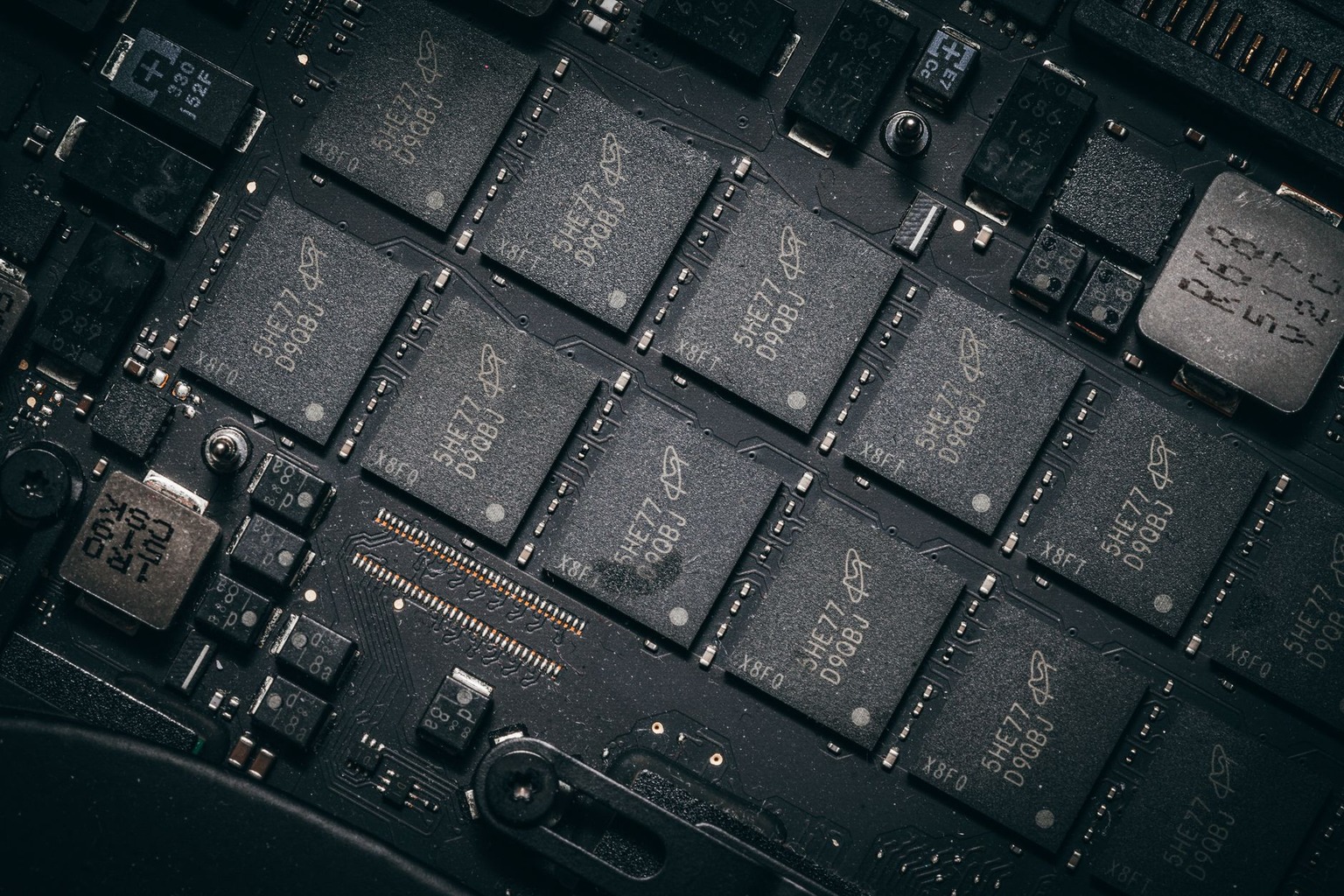
The physical realization of these intelligent plans rests on the evolution of the eSIM form factor itself. Early eSIM implementations were little more than a rewritable chip soldered onto the motherboard, capable of holding a handful of temporary eSIM profiles. By 2026, the specification has expanded to support multi‑profile orchestration, where the device can simultaneously maintain a home carrier, a travel partner, and a temporary local profile, all managed by a single AI runtime. This capability is particularly evident in flagship smartphones, which now ship with a “profile manager” UI that visualizes data usage on eSIM phones in real time across all active profiles. Moreover, the integration of dedicated AI co‑processors on the modem chipset allows for on-device inference, reducing the latency between predictive action and network response. The result is a device that feels less like a communication tool and more like a context-aware companion. Yet, the pace of hardware adoption lags behind software promises; many mid‑range devices still lack the modem firmware required to support the latest predictive features, creating a fragmentation that can leave some users feeling left out of the smarter‑plan revolution.
The Human Element: Training Users for an Algorithmic Plan
Finally, the success of AI-driven eSIM plans in 2026 hinges on the human factor. No matter how sophisticated the underlying analytics, the plan is only as good as the user’s willingness to engage with it. Carriers are responding by embedding educational prompts directly into the eSIM activation flow, guiding users through the benefits of predictive roaming, allowance modulation, and subscription tuning. Some are even experimenting with gamified dashboards that reward users for allowing the AI to optimize their usage, offering small data bonuses for opting into anonymized behavior tracking. The goal is to shift the perception of the mobile plan from a static contract to a living service that evolves with the user. However, there is a risk of alienation; users who feel their autonomy is being eroded by an unseen algorithm may revolt by switching to minimalist, non‑smart plans. The balance between helpful automation and perceived intrusion will likely be the defining battleground of the next few years, as the industry learns that the best AI is the one that the user trusts to watch their back without stealing the wheel.

I’m a tech enthusiast who loves exploring how eSIMs simplify staying connected while traveling. I spend my free time testing new smartphones and sharing tips on getting the most out of mobile data abroad.