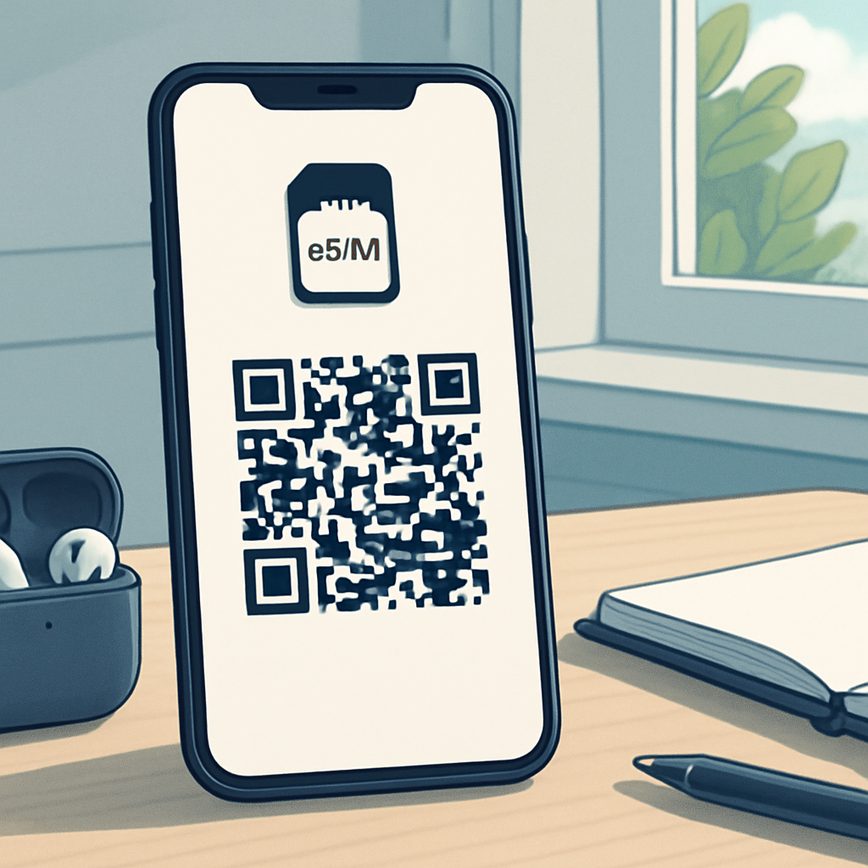
Understanding eSIM QR codes
23/05/2026
What is an eSIM QR Code?
An eSIM QR code is a crucial component of the embedded SIM (eSIM) technology, which is revolutionizing the way mobile devices connect to cellular networks. Unlike traditional physical SIM cards, an embedded SIM is a digital SIM that resides directly within a device, allowing users to activate cellular plans without needing to insert a physical card. The eSIM QR code serves as a bridge between the user’s device and the digital SIM profile provided by a carrier.
When you scan an eSIM QR code with your smartphone or other compatible device, it initiates the process of downloading your mobile operator’s subscription profile securely to your eSIM chip. This QR code contains all the necessary credentials and configuration data required to set up your cellular connection remotely. This eliminates the need to visit a store or wait for a physical SIM card delivery, making activation faster and more convenient.
The role of the eSIM QR code in digital SIM technology is vital because it enables seamless switching between mobile carriers or plans without any hardware changes. For instance, travelers can easily add local data plans via eSIM QR codes, avoiding expensive roaming charges with their home carrier. Similarly, multi-line users can manage different numbers on one device by scanning different eSIM QR codes for each subscription.
Overall, the eSIM QR code simplifies managing mobile connectivity in today’s increasingly digital world, providing users with flexibility and control over their cellular plans. This integration of the embedded SIM with QR code technology marks a significant advancement in mobile communications, supporting the ongoing evolution toward fully digital and more user-friendly mobile network experiences.
How eSIM QR Codes are Generated
The generation of eSIM QR codes is a critical step in facilitating seamless mobile connectivity. Mobile carriers initiate this process by creating an eSIM activation code, which is unique to each user. This code contains encrypted information that links directly to the user’s eSIM profile stored on the carrier’s secure servers. The profile includes all the necessary details such as subscriber identity, service parameters, and network configuration settings.
When a new eSIM is issued, the carrier’s system automatically generates a QR code through a specialized QR code generation platform. This QR code effectively serves as a digital key that enables devices to download and activate the corresponding eSIM profile without needing a physical SIM card. The QR code is typically provided to the user via email, a web portal, or printed materials, ensuring accessibility and ease of use.
Upon scanning the QR code with a compatible device, the eSIM activation code within the QR triggers the device to connect securely to the carrier’s network, validate the subscriber information, and install the eSIM profile. This streamlined digital approach allows mobile carriers to manage user subscriptions remotely, offer instant service provisioning, and enhance the overall user experience by eliminating delays associated with physical card distribution.
Reading and Scanning eSIM QR Codes
To scan an eSIM QR code, you need a compatible device equipped with a QR scanner feature, typically found in modern smartphones. Start by accessing the settings menu on your device and navigating to the section for cellular or mobile data plans. From there, select the option to add a new plan, which will prompt your device to open the camera or built-in QR scanner. Point the camera steadily at the eSIM QR code provided by your carrier or service provider.
During the eSIM QR code scanning process, your smartphone reads the embedded information, which contains the necessary credentials to activate the eSIM. This eliminates the need for a physical SIM card. Once scanned, the activation process begins automatically in the background, securely downloading the carrier profile and installing it on your device. This seamless smartphone setup allows the eSIM to function immediately for voice, text, and data services without manual input.
The eSIM QR code scanning significantly simplifies the activation process, ensuring users can quickly switch carriers or add new plans without visiting retail stores. Most devices provide visual cues or confirmation messages indicating the progress of the activation, and users might be prompted to restart their phones to finalize setup. In summary, the QR scanner acts as a gateway that triggers the efficient and secure provisioning of your new digital SIM profile, enhancing the overall user experience.
Benefits of Using eSIM QR Codes
eSIM QR codes offer a range of benefits that have revolutionized the way we connect to mobile networks. One of the most notable advantages is the unparalleled convenience they provide. Unlike traditional SIM cards, which require physical swapping, eSIMs allow users to activate mobile service simply by scanning a QR code. This eliminates the need to visit a store or wait for a card to arrive, making the process faster and more user-friendly.
The convenience of eSIM QR codes extends beyond just activation. They enable seamless carrier switching without the hassle of replacing physical SIM cards. This flexibility empowers users to easily switch between carriers to find better deals, coverage, or services without any downtime or intricate setups. Whether traveling internationally or upgrading to a new plan, managing your mobile connectivity becomes significantly simpler with eSIM technology.
Another key benefit is the enhanced mobility that eSIM QR codes facilitate. Since there’s no physical SIM card tied to a device, multiple profiles can be stored and accessed on a single device, allowing users to switch between personal and business numbers or different regional plans with ease. This dynamic capability supports a highly mobile lifestyle, ensuring consistent connectivity whether you are home or abroad.
Furthermore, eSIM benefits extend to the environmental impact by reducing the production and disposal of plastic SIM cards. As carriers and manufacturers adopt this technology, the digital approach to mobile connectivity not only enhances user experience but also contributes to sustainability efforts.
In summary, eSIM QR codes provide unmatched convenience, enabling easier carrier switching and promoting greater flexibility and mobility for users. As this technology continues to evolve, it is set to redefine how we think about mobile connectivity, making it more adaptable, efficient, and environmentally friendly.
Simplified Activation and Setup
eSIM QR codes revolutionize the activation and setup process, making it more straightforward and user-friendly. By scanning a single QR code, users can bypass the traditional lengthy steps of inserting a physical SIM card and manually entering network details. This streamlining dramatically reduces the time and effort involved, allowing instant activation of mobile service.
The digital SIM convenience brought by eSIM QR codes enhances the overall user experience by offering seamless connectivity across devices. Users can easily switch carriers or plans without needing to visit a store or wait for a physical SIM to arrive. This flexibility supports a more dynamic lifestyle, especially for frequent travelers and tech-savvy consumers.
Moreover, eSIM QR codes simplify troubleshooting and upgrades since users can reconfigure or update their plans digitally. This eliminates common frustrations related to physical SIM cards, such as damage or loss. The activation process becomes more efficient, reliable, and eco-friendly by reducing plastic waste.
Overall, the integration of eSIM QR codes into device setup amplifies convenience and satisfaction. It empowers users to manage their mobile connectivity easily and confidently, marking a significant step forward in digital mobile technology. As adoption grows, expect even smoother and more intuitive activation processes that prioritize user ease and flexibility.
Seamless Carrier Switching
eSIM QR codes revolutionize how users manage their mobile connectivity by enabling seamless carrier switching without the need for physical SIM cards. This technology allows individuals to download multiple profiles directly onto their device, providing remarkable flexibility in how they connect to various networks. With eSIM management, users can effortlessly switch between carriers through simple scans of eSIM QR codes, eliminating the hassle of removing and inserting physical SIM cards.
The ability to maintain multiple profiles simultaneously offers tremendous convenience, especially for frequent travelers or those who rely on different carriers for work and personal use. Switching carriers becomes a quick, digital process—users select the desired profile on their device, activating the appropriate network without delay. This flexibility helps customers choose plans that best suit their needs while avoiding the inconvenience and expense associated with swapping physical SIM cards.
Moreover, eSIM QR codes streamline eSIM management by providing a secure and user-friendly method to download and activate carrier profiles. This software-driven approach supports rapid carrier transitions, supporting consumer demands for instant connectivity and versatility. As a result, eSIM QR codes play a pivotal role in simplifying mobile connectivity, empowering users with greater freedom and enhanced control over their mobile service options.
Security and Privacy Considerations
When using eSIM QR codes, understanding the security and privacy aspects is crucial for protecting personal data and ensuring a secure activation process. eSIM security hinges on several layers of protection designed to prevent unauthorized access and misuse of digital SIM credentials.
First and foremost, the QR codes used for eSIM activation contain sensitive information, including the subscription profile and activation data. If intercepted by malicious actors, this data could potentially be exploited to clone or hijack a user’s mobile identity. Therefore, it’s essential that the QR codes are transmitted and stored securely, often using encrypted channels, to reduce the risk of interception during transfer.
Another key factor in eSIM security is the secure storage and management of the eSIM profiles within the device. Modern smartphones and devices utilize secure elements or trusted execution environments to safeguard the profile, ensuring that even if an attacker gains physical access to the device, the information remains protected. This hardware-based security adds an important layer beyond the QR code itself.
QR code privacy also plays a significant role in data protection. When scanning an eSIM QR code, devices should validate the source of the QR code to avoid phishing attacks or fraud attempts. Insecure or malicious QR codes might direct users to fraudulent activation servers, leading to data breaches or service disruptions. Users should always ensure that QR codes come from trusted sources, such as official carrier communications or secure portals.
Data protection laws, such as GDPR, also influence how eSIM providers handle user information encoded in QR codes. Providers must adhere to strict guidelines on storing, processing, and sharing data, ensuring that users’ privacy rights are upheld. This includes anonymizing sensitive data when possible and providing transparency about how personal data is used during the activation process.
Finally, secure activation procedures are vital. Many carriers implement multi-factor authentication and verification mechanisms alongside QR code scanning to ensure that the person activating the eSIM is indeed the rightful subscriber. This reduces the likelihood of unauthorized activations and improves overall service integrity.
In summary, while eSIM QR codes facilitate convenient and flexible mobile connectivity, maintaining robust eSIM security, safeguarding QR code privacy, and following stringent data protection standards are essential for safe and secure activation experiences.
Potential Risks of QR Code Scanning
Scanning QR codes, especially those claiming to be eSIM QR codes, comes with potential risks that users must be aware of. Malicious actors can disguise harmful QR codes as legitimate eSIM QR codes, leading to significant security threats such as phishing attacks or the installation of malware on your device. These threats can compromise your personal data, steal sensitive information, or even take control of your mobile connection.
Phishing attacks via QR codes trick users into visiting fraudulent websites that appear authentic, prompting them to enter personal data or login credentials. Malware hidden behind such QR codes can silently infect your device, causing data breaches or system malfunctions. Because QR codes are scanned quickly without much scrutiny, users often overlook these risks.
To avoid falling victim to QR code risks, always verify the source before scanning any eSIM QR code. Trust only codes from official carriers or service providers and avoid scanning codes from unsolicited messages or emails. Additionally, use security software capable of detecting malicious websites and apps triggered by suspicious QR codes. Staying vigilant and cautious when scanning QR codes helps safeguard your device and personal information against evolving security threats.
Best Practices for Secure eSIM Activation
Ensuring secure activation of eSIM profiles using QR codes is crucial to protect your personal data and maintain device integrity. First and foremost, always obtain your eSIM QR codes from verified carriers. Trusted providers use secure activation protocols that include data encryption, which safeguards your information during the transfer process from the QR code to your device.
Another important guideline is to verify the source of your eSIM QR code before scanning. Avoid scanning QR codes from unknown or suspicious sources, as these can be exploited by malicious actors to install fraudulent profiles or compromise your device. Always double-check that the QR code is delivered through official channels, such as your carrier’s official website, app, or direct communication.
User precautions play a vital role in secure activation. Keep your device software up to date to benefit from the latest security patches. Additionally, enable security features such as biometric authentication or strong device passwords to prevent unauthorized access. If your carrier offers two-factor authentication, activate it for an extra layer of protection during the activation process.
Finally, be cautious when sharing any activation information. Do not distribute your QR code or activation credentials publicly or to untrusted parties. By following these best practices—using verified carriers, ensuring data encryption, and adopting user precautions—you can confidently activate your eSIM profiles with enhanced security and peace of mind.

I’m a tech enthusiast who loves exploring how eSIMs simplify staying connected while traveling. I spend my free time testing new smartphones and sharing tips on getting the most out of mobile data abroad.