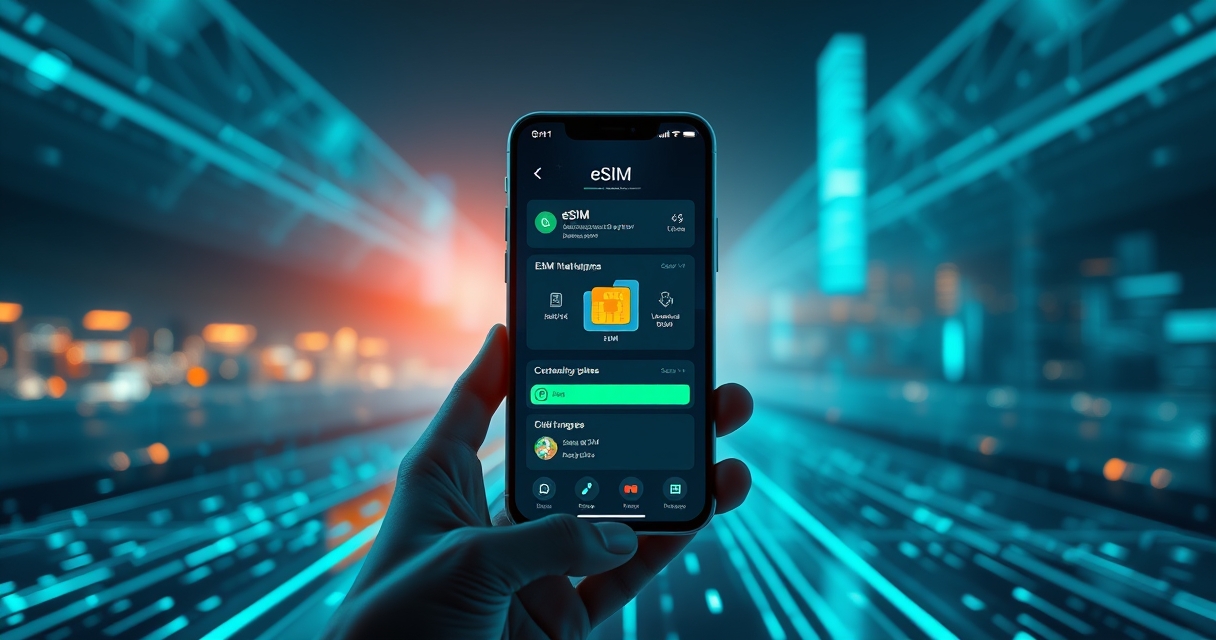
Remote management of eSIM
25/06/2026
The world of mobile connectivity is undergoing a silent revolution, shifting from the tangible, plastic chip in our hands to a purely digital identity embedded within our devices. At the heart of this transformation lies the eSIM, or embedded SIM. But the true power of this technology isn’t just its physical absence; it’s the unprecedented control and flexibility unlocked by its remote management capabilities. For travelers, digital nomads, smartphone enthusiasts, and anyone reliant on seamless mobile data, understanding remote eSIM management is the key to unlocking a new era of digital mobility. It transforms your smartphone from a statically connected device into a dynamically configurable portal for global connectivity, all manageable from a simple app or web portal.
What is Remote eSIM Management? The End of the Physical Swap
Remote eSIM management, often referred to as Remote SIM Provisioning (RSP), is the technological framework that allows a mobile carrier or eSIM service provider to securely download, activate, deactivate, and switch cellular service profiles on your device over-the-air (OTA). Think of it as the digital replacement for the entire lifecycle of a physical SIM card. Instead of visiting a store, waiting for a plastic SIM to arrive by mail, or fumbling with a paperclip to swap trays, you can provision a new data plan with a few taps. This process uses a secure, encrypted channel between your device and a remote provisioning platform, ensuring that sensitive profile data is protected during transmission. The end-user experience is beautifully simple: scan a QR code, follow an app prompt, or enter an activation code, and within minutes, your device is connected to a new network, often halfway across the world.
This capability is foundational to the core promises of the eSIM ecosystem: flexibility, convenience, and scalability. For the individual user, it means being able to instantly switch to a local data plan upon landing in a new country, avoiding exorbitant roaming charges. For a business managing a fleet of employee smartphones, it enables IT administrators to deploy, configure, and manage connectivity policies for hundreds of devices from a central dashboard without ever touching a single phone. The physical constraints of SIM logistics—inventory, shipping, manual handling—are completely eliminated, replaced by instant, software-driven control.
How Remote eSM Management Works: From QR Code to Active Profile
The journey of remotely managing an eSIM is a carefully orchestrated dance between your smartphone, the eSIM provider’s platform, and the mobile network operator. It begins when you decide to acquire a new eSIM profile, typically by purchasing a data plan from a travel-focused eSIM provider or your carrier. Instead of receiving a physical card, you receive a digital token—most commonly in the form of a QR code or a lengthy activation code. This token is not the eSIM profile itself, but a secure key that initiates the provisioning process. When you scan the QR code in your device’s cellular settings or enter the code into a dedicated provider’s app, your device’s eSIM chip establishes a secure, authenticated connection to a remote provisioning server, known in the industry as the SM-DP+ (Subscription Manager – Data Preparation).
This server, operated by the carrier or a trusted partner, holds the encrypted cellular profile that contains all the necessary credentials to authenticate your device on the mobile network. After verifying the request, the SM-DP+ transmits the profile package securely to your device’s eSIM. The eSIM, which contains a secure element—a tamper-resistant hardware chip—decrypts and installs the profile. Your phone then registers on the network using this new digital identity. The entire process, from scan to connected, usually takes under two minutes. Furthermore, modern smartphones allow you to store multiple eSIM profiles simultaneously, switching between them in software settings. Remote management extends to the entire lifecycle: providers can later push updates to the profile, and critically, they or you can remotely deactivate or delete the profile when it’s no longer needed, ensuring security and freeing up the eSIM’s memory.
The Traveler’s Superpower: Instant Connectivity Anywhere
For the modern traveler, remote eSIM management is nothing short of a superpower. It solves the most persistent pain points of international travel: finding affordable, high-quality mobile data upon arrival. The traditional options—expensive roaming from your home carrier, hunting for a local SIM vendor at the airport, or relying on unpredictable public Wi-Fi—are now obsolete. With remote eSIM provisioning, you can research and purchase a local or regional data plan from a specialized eSIM provider weeks before your trip or literally while you’re in the air. The moment you land and disable airplane mode, you can activate the pre-downloaded profile and have instant internet access for maps, translation, ride-sharing, and contacting loved ones.

This capability also enables powerful new travel strategies. Imagine a multi-country European trip: instead of buying a separate SIM in each nation, you can provision a single, pan-European eSIM data plan before departure. For longer stays or trips to regions with complex telecom markets, you can start with a general travel eSIM and later remotely provision a local, more cost-effective profile for long-term use, all without a physical swap. The agility is transformative. Furthermore, if you encounter issues with connectivity, many reputable eSIM providers offer support that can remotely diagnose and, in some cases, re-provision or push configuration updates to your eSIM to resolve the problem, often without requiring any complex steps on your end.
Beyond the Consumer: MDM and Enterprise Fleet Control
While the consumer benefits are profound, remote eSIM management delivers even greater transformative value for businesses and enterprises managing large fleets of smartphones, tablets, and IoT devices. Integrated with Mobile Device Management (MDM) and Enterprise Mobility Management (EMM) platforms, it allows IT administrators to exercise granular control over corporate cellular connectivity at scale. From a central console, an admin can remotely provision eSIM profiles onto hundreds of employee devices deployed globally, ensuring immediate connectivity from the first boot. This is known as zero-touch onboarding, where a new device can be unboxed, powered on, and automatically connect to the corporate mobile network, ready for use.
The management capabilities are extensive. IT can enforce policies, such as restricting users from altering APN settings or adding unauthorized personal eSIMs, thus maintaining network security and compliance. They can monitor data usage across the fleet in near real-time and remotely switch profiles to optimize costs—for example, moving a device from an expensive international roaming plan to a local plan when an employee’s travel plans change. Crucially, remote deprovisioning is a key security feature. When a device is lost, stolen, or an employee leaves the company, administrators can instantly and irrevocably remove the corporate eSIM profile from the device, severing its cellular access and protecting sensitive data. This level of remote, automated lifecycle management drastically reduces operational overhead and security risks associated with physical SIM cards.
Security and Reliability: The Pillars of Digital Trust
The shift from a physical token to a software profile naturally raises questions about security. In practice, remote eSIM management is built on a foundation of robust security standards, primarily defined by the GSMA, the global mobile industry association. The entire provisioning chain is encrypted. The eSIM chip itself contains a secure element, a dedicated microprocessor that securely stores cryptographic keys and profiles, isolated from the device’s main operating system. This makes it extremely resistant to tampering or cloning. The profiles are digitally signed by the issuing carrier, ensuring their authenticity.
From a reliability perspective, the over-the-air nature of management is inherently more resilient than physical handling. There is no risk of a SIM card being damaged, lost in the mail, or incorrectly installed. The network-centric model also allows for quicker troubleshooting and recovery. If a profile becomes corrupted, a new one can be pushed remotely. For travelers, choosing a reputable eSIM provider with a robust remote management platform is essential. Look for providers that offer clear instructions, responsive customer support capable of remote assistance, and transparent terms of service regarding profile management, switching policies, and data privacy. The best services make the complex security processes completely invisible to the user, delivering simple, safe, and reliable connectivity.
The Future of Remote Management: SGP.32 and the IoT Revolution
The evolution of remote eSIM management is set to accelerate with the advent of new standards, particularly for the Internet of Things (IoT). While current consumer eSIMs (driven by the GSMA’s SGP.22 standard) are tightly integrated with the device’s operating system, the emerging SGP.32 standard is a game-changer for IoT. It defines a fully remote, standalone management architecture where the eSIM (or iSIM – integrated SIM) can be managed independently of the device’s main application processor and without complex cellular modem integration. This means a wider array of simpler, lower-power sensors and trackers can be equipped with eSIM technology.

For scenarios like global asset tracking, smart meters, and connected vehicles, SGP.32-enabled remote management will allow for mass-scale, over-the-air provisioning and carrier switching throughout a device’s entire decade-long lifespan, without any physical access. This will further democratize global cellular connectivity for objects, mirroring the convenience travelers now enjoy. For smartphone users, the principles refined in IoT will feedback into more resilient and flexible consumer eSIM systems, potentially enabling even smoother switching between personal and work profiles, or dynamic, context-aware network selection managed seamlessly in the background.
Embracing the Remote-Controlled Mobile Experience
Remote eSIM management is the invisible engine powering the shift toward true digital mobility. It turns connectivity from a static, physical commodity into a dynamic, on-demand service. For the individual, it means unprecedented freedom and convenience in staying connected across borders. For businesses, it unlocks new levels of operational efficiency and security control. As the technology matures and standards like SGP.32 expand its reach into the IoT, our very concept of a mobile network subscription will continue to evolve. The era of searching for a SIM card cutter or a paperclip is fading into the past, replaced by the simple, powerful tap of a “Download” button on your smartphone screen, connecting you to the world.

I’m a tech enthusiast who loves exploring how eSIMs simplify staying connected while traveling. I spend my free time testing new smartphones and sharing tips on getting the most out of mobile data abroad.