eSIM and 5G networks
30/05/2026
Understanding eSIM Technology
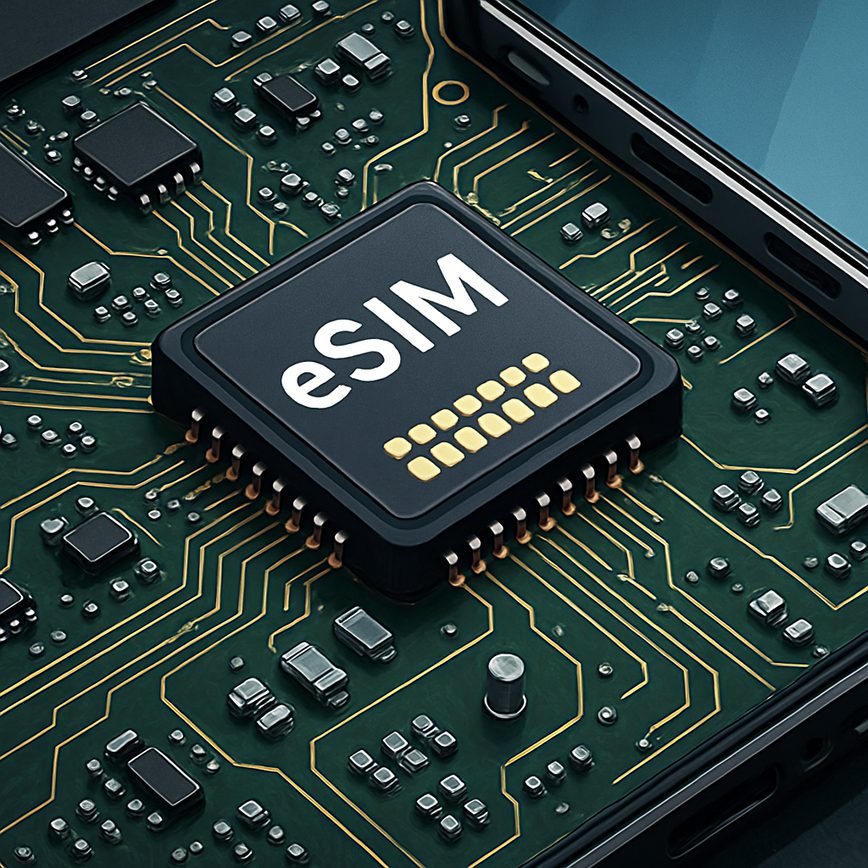
eSIM technology, also known as embedded SIM or digital SIM, represents a significant evolution from the traditional physical SIM cards used in mobile devices for decades. Unlike traditional SIM cards that require a physical chip inserted into a device, an eSIM is a small embedded chip built directly into a device’s motherboard. This digital SIM is programmable and can be remotely activated by carriers, removing the need for a physical card swap when switching networks.
The key difference between eSIM technology and traditional SIM cards lies in their form and flexibility. Traditional SIM cards are physical, removable, and tied to a specific network provider until replaced. An eSIM, however, is embedded within the device and can store multiple carrier profiles, allowing users to switch between networks electronically without changing physical cards. This programmability makes managing mobile plans and carriers much easier and more convenient for consumers.
For consumers, the main advantages of eSIM technology are convenience and versatility. With an embedded SIM, users can activate service plans instantly without waiting for a plastic SIM card to be delivered or visiting a store. It is especially beneficial for travelers who can switch local carriers quickly and cost-effectively without purchasing new SIM cards. eSIM benefits also include reduced risk of losing or damaging the SIM card and the ability to have multiple phone numbers or plans on a single device, streamlining personal and business communications.
Carriers also gain notable advantages from eSIM technology. It simplifies logistics and reduces costs related to the production, distribution, and management of physical SIM cards. Carriers can remotely provision and update SIM profiles, enhancing customer service and enabling quicker plan activations or changes. Additionally, eSIM technology supports the growing ecosystem of IoT devices and connected gadgets, which often require embedded connectivity solutions.
Overall, eSIM technology marks a transformative shift in how mobile connectivity is delivered and managed, benefiting both consumers and carriers alike by providing a more flexible, efficient, and user-friendly approach to digital SIM services.
How eSIM Works
The technical process of eSIM functionality begins with SIM activation, which differs significantly from traditional physical SIM cards. Instead of inserting a physical card, the eSIM is embedded directly into the device’s hardware, allowing users to activate their cellular plans remotely. This is achieved through a process called remote provisioning, which enables mobile network operators to send SIM profiles over the air to the eSIM chip, eliminating the need for physical SIM card swaps.
Remote provisioning plays a central role in managing eSIMs, as it securely delivers and updates SIM profiles via an encrypted connection. When a user selects a plan, the operator transmits the digital SIM profile, which contains all necessary identification and authentication data, directly to the eSIM. This process ensures that activation is fast, convenient, and flexible across multiple operators and devices.
An essential feature of eSIM functionality is the ability to manage multiple SIM profiles on a single device. Users can store several profiles simultaneously and switch between them without changing physical cards. This capability is especially useful for frequent travelers or those who want to separate business and personal phone numbers. With eSIM technology, SIM profiles can be activated, deactivated, or deleted through the device settings or network provider apps, providing a seamless and user-friendly experience.
Advantages of eSIM Over Traditional SIMs
One of the primary eSIM benefits is the convenience it offers by eliminating the need for a physical SIM card. Without a physical SIM required, devices can be slimmer and more compact, freeing up internal space for other components like larger batteries or enhanced cameras. This design flexibility allows manufacturers to innovate more effectively, producing sleeker phones and wearables.
Another significant advantage is the ease of switching carriers. With traditional SIM cards, swapping providers usually requires physically changing the SIM or purchasing a new one. In contrast, eSIM allows users to quickly and effortlessly change plans through software settings, supporting flexible plans that can be adapted on-demand. This flexibility is ideal for travelers, frequent switchers, or those who want to manage multiple carriers without hassle.
Device compatibility is also improved with eSIM technology. Since the eSIM is embedded, it supports multiple profiles and can connect to different networks without any hardware change. This means a single device can be used globally with different network operators, enhancing mobility and reducing the reliance on various physical SIM cards.
Finally, eSIMs offer better security. They are less prone to theft or tampering compared to physical SIM cards, as they cannot be removed or swapped easily. The digital nature of eSIMs also allows carriers and users to remotely manage and deactivate SIM profiles if a device is lost or stolen, providing an extra layer of protection against fraud and misuse.
Integration of eSIM with 5G Networks
The integration of eSIM technology with 5G networks marks a significant evolution in mobile technology, offering unprecedented enhancements in connectivity, speed, and overall user experience. eSIM 5G integration simplifies the way devices connect to mobile networks by allowing consumers to activate and switch between network carriers without needing a physical SIM card. This seamless adaptability is especially crucial as 5G networks continue to expand globally, demanding more flexible and dynamic connectivity solutions.
5G connectivity is renowned for its lightning-fast speeds, low latency, and higher capacity compared to previous generations. When paired with eSIM technology, these benefits are amplified because eSIMs enable instantaneous network provisioning and profile management. Users can effortlessly shift between multiple carriers or plans best suited to their needs, optimizing network performance whether they are at home, traveling, or in areas with varying network coverage. This versatility maximizes the advantages of 5G’s accelerated data transfer rates and robust network stability.
Moreover, the eSIM architecture supports enhanced device design by eliminating the need for physical SIM slots, which can improve water resistance and enable slimmer, more compact smartphones and IoT devices. This integration supports the future-forward vision of mobile technology, where devices maintain uninterrupted access to 5G networks without the constraints of physical hardware. Network providers can also deploy new services and updates remotely, ensuring connectivity evolves alongside technological advancements without requiring user intervention.
From a user experience perspective, eSIM 5G integration enables more personalized and efficient connectivity solutions. Consumers benefit from easier access to global 5G networks through local carriers without the hassle of swapping SIM cards or dealing with physical logistics. This is particularly important for frequent travelers and remote workers who rely on consistent high-speed internet for communication and productivity. As 5G networks grow, the dynamic capabilities of eSIM technology promise to sustain and enhance mobile connectivity, driving a new era of network performance and user empowerment in mobile technology.
Benefits of Using eSIM with 5G
The integration of eSIM technology with 5G networks brings numerous advantages that enhance the overall mobile experience. One of the primary benefits is the fast connectivity offered by 5G eSIM benefits. With eSIM, users can quickly access 5G networks without the need for physical SIM card swaps, enabling instant activation and faster network access. This seamless connection ensures users experience the high speeds and low latency promised by 5G technology.
Additionally, network reliability is significantly improved by combining eSIM with 5G. eSIM allows devices to maintain connections across multiple carriers, which means if one network faces congestion or disruption, the device can automatically switch to a more reliable network without any manual intervention. This flexibility ensures consistent and stable connectivity, which is crucial for both personal and professional use.
Seamless switching is another vital advantage when using eSIM with 5G. Traditional SIM cards require physical replacement, often causing delays and inconvenience when changing carriers or plans. However, with eSIM, users can effortlessly switch between carriers or activate new plans digitally. This feature is particularly beneficial for frequent travelers and those who want to take advantage of competitive offers without the hassle of acquiring a new SIM card.
In summary, the synergy between eSIM and 5G networks creates a powerful combination that delivers fast connectivity, enhanced network reliability, and seamless switching. These benefits collectively elevate the mobile experience, making it more efficient, flexible, and user-friendly.
Challenges and Considerations
Despite the promising benefits of eSIM technology and 5G networks, there are several challenges and considerations to address. One of the primary eSIM challenges lies in device compatibility. Not all devices currently support eSIM functionality, which can limit adoption, especially among users with older or less common models. This incompatibility requires manufacturers and carriers to collaborate closely to ensure a seamless experience for consumers transitioning to eSIM-enabled devices.
Security concerns are another critical issue in the rollout of eSIM and 5G technologies. While eSIMs enhance convenience, they also introduce new vulnerabilities, such as potential risks of remote hacking or unauthorized profile downloads. Robust security protocols and continuous updates are essential to protect user data and ensure trust in these evolving technologies.
The 5G rollout itself faces issues related to infrastructure and regional disparities. Some regions experience slower deployment due to high costs, regulatory hurdles, or limited network coverage. This uneven adoption can affect how quickly consumers and businesses can benefit from the full potential of 5G and eSIM integration, making widespread accessibility a key concern.
Ultimately, overcoming these eSIM challenges and 5G rollout issues requires coordinated efforts from device manufacturers, network providers, and policymakers. Addressing device compatibility, enhancing security measures, and fostering equitable network deployment will be vital to unlocking the full promise of next-generation mobile connectivity.
Future Trends of eSIM and 5G Technologies
The future of mobile communication is set to be profoundly shaped by the convergence of eSIM technology and 5G development. These advancements pave the way for a new era of connectivity, particularly as the Internet of Things (IoT) continues to expand. As mobile innovation accelerates, eSIMs will play an increasingly crucial role in enabling seamless, flexible, and remote device management, removing the need for physical SIM cards and allowing users to switch carriers and plans effortlessly.
With 5G networks offering unprecedented speed, low latency, and massive device connectivity, the synergy between eSIM and 5G is crucial for the next-generation communication ecosystem. Together, they will empower IoT devices, ranging from smart home appliances to industrial sensors, creating an interconnected environment where data exchange happens in real-time and with improved reliability. This will unlock new possibilities in automation, smart cities, healthcare monitoring, and more.
Looking ahead, the eSIM future includes enhanced security features and broader adoption across various device categories, not limited to smartphones but expanding to wearables, laptops, and even vehicles. The integration of eSIM with 5G networks offers mobile operators and consumers more dynamic control over connectivity options, fostering an ecosystem where personalization and instant connectivity are paramount.
Moreover, the evolution of mobile communication standards driven by 5G development will complement eSIM technology, ensuring high interoperability, scalability, and support for diverse applications. This combination is expected to fuel mobile innovation, driving the creation of new services and business models that leverage enhanced network capabilities and flexible device provisioning. As these technologies mature, they will be foundational in the transition towards smarter, more connected, and efficient digital environments.
In summary, the future trends of eSIM and 5G technologies signal a transformative shift in how devices connect, communicate, and operate within the IoT landscape. The ongoing advancements will not only boost user experience but also catalyze innovation across industries, making mobile connectivity more adaptive, resilient, and powerful than ever before.
Role of eSIM and 5G in IoT
The integration of IoT eSIM technology with 5G networks is transforming the landscape of Internet of Things connectivity. This combination enables seamless, scalable, and secure connections for a vast range of smart devices, from wearables to industrial sensors. Unlike traditional SIM cards, IoT eSIMs can be remotely programmed and managed, allowing devices to switch carriers or activate services without physical replacement. This flexibility is crucial for IoT ecosystems where devices may be deployed in diverse and sometimes inaccessible locations.
5G IoT connectivity enhances this dynamic by providing high-speed, low-latency networks capable of handling massive device densities. The increased bandwidth and faster data transmission support real-time communication and processing, essential for applications such as smart cities, autonomous vehicles, and healthcare monitoring. Together, eSIM and 5G facilitate a scalable network infrastructure that grows effortlessly with the expanding number of smart devices.
Moreover, the security provided by eSIM technology complements the advanced encryption and authentication protocols of 5G networks. This ensures that IoT devices maintain robust protection against cyber threats and unauthorized access, which is vital as these devices often handle sensitive data. The fusion of IoT eSIM and 5G not only drives innovation but also provides the reliability and scalability needed for the future of connected smart devices and networks.
Predictions and Market Adoption
As 5G expansion accelerates globally, market trends indicate a robust increase in eSIM adoption paired with this next-generation connectivity. Industry experts predict that the seamless integration of eSIM technology within consumer devices will drive significant growth in market penetration over the coming years. This forecast is supported by the increasing demand for enhanced flexibility and convenience in mobile connectivity, which eSIMs uniquely provide.
Research highlights that as 5G networks become more widespread, the proliferation of compatible devices featuring embedded eSIMs will reshape consumer technology habits. Users are gravitating towards eSIM-enabled devices for their ability to switch operators without physical SIM replacements, making the technology a key enabler for the evolving digital lifestyle. The synergy between 5G’s high-speed capabilities and eSIM’s flexible connectivity is expected to further boost adoption rates globally.
Moreover, market adoption is being propelled by telecom operators who are actively supporting eSIM infrastructure to capitalize on 5G expansion efforts. Consumer technology brands are also aggressively incorporating eSIM support to stay competitive and appeal to tech-savvy users. As a result, business forecasts reveal a compound annual growth rate (CAGR) for eSIM-enabled device shipments aligned with the rapid rollout of 5G, making this combination a fundamental driver of the next wave of mobile innovation.

I’m a tech enthusiast who loves exploring how eSIMs simplify staying connected while traveling. I spend my free time testing new smartphones and sharing tips on getting the most out of mobile data abroad.