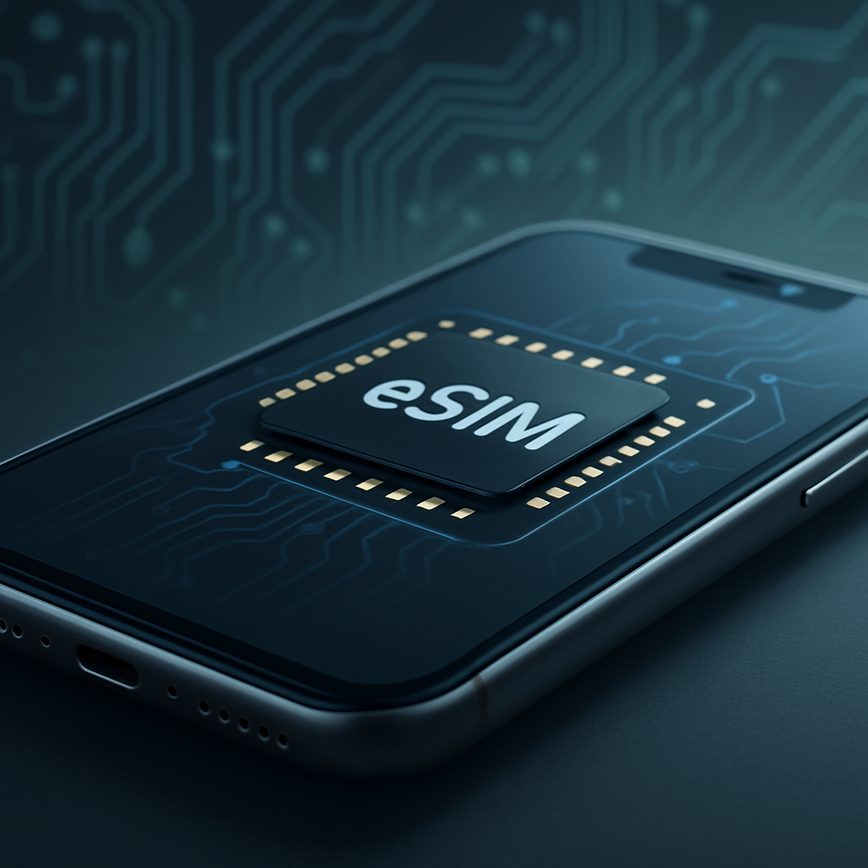
Future of eSIM
24/05/2026
Overview of eSIM Technology
eSIM technology, short for embedded SIM, represents a significant evolution in mobile connectivity. Unlike traditional SIM cards, which are physical chips that need to be manually inserted and swapped between devices, an eSIM is a digital SIM embedded directly into a device’s hardware. This embedded SIM enables users to activate cellular plans electronically without the need for a physical card, making it a more flexible and streamlined approach to mobile network connectivity.
The key distinction between eSIM technology and traditional SIM cards lies in their form and functionality. Traditional SIM cards are removable, plastic cards containing a small chip that identifies a user on a cellular network. To switch carriers or plans, the physical SIM must be replaced. In contrast, the embedded SIM is soldered onto the device’s motherboard, making it non-removable. Instead of physical swapping, users can switch between multiple network profiles digitally through software, often via the device settings or carrier apps. This digital SIM process offers greater convenience, allowing instant switching between carriers or plans without needing to visit a store or receive a new physical card.
Adoption of eSIM technology has been steadily increasing across various device categories, from smartphones and tablets to laptops and wearables. Major smartphone manufacturers have integrated eSIM capabilities into their latest models, responding to consumer demand for easier network management and enhanced device design with smaller or no SIM trays. Cellular carriers worldwide are increasingly supporting eSIM activations, expanding their services to include remote provisioning and multiple profiles per device. Despite this growing acceptance, the transition is still ongoing, with some regions and carriers yet to fully support eSIM functionality. Nonetheless, the momentum behind eSIM technology signifies a future where physical SIM cards may become obsolete, replaced by the more versatile and convenient digital SIM experience.
Overall, eSIM technology is shaping the future of mobile connectivity by providing a smarter, more integrated solution compared to traditional SIM cards. Its ability to simplify carrier switching, reduce physical components, and enhance device design continues to drive its global adoption and impact on the telecommunications landscape.
How eSIM Works
eSIM functionality revolutionizes the way mobile connectivity is managed by integrating the SIM provisioning process directly into the device. Unlike traditional SIM cards, an eSIM is embedded within the device hardware, enabling seamless activation without the need for physical swapping. The activation process begins when the device initiates a secure connection with the mobile network operator to download its unique subscription profile.
This profile downloading is a critical step where the device receives encrypted data that authorizes network access and configures essential details such as the IMSI (International Mobile Subscriber Identity) and authentication keys. The remote SIM provisioning (RSP) technology allows users to switch between multiple profiles stored on the eSIM chip, offering flexibility in choosing different mobile networks or plans without needing new SIM cards.
Network switching with an eSIM is streamlined through software commands that activate one profile while deactivating another, allowing users to connect to various mobile networks depending on their location or preference. This capability enhances user convenience and supports improved mobile data management, particularly for frequent travelers or multi-network users. Overall, the eSIM system optimizes connectivity by simplifying SIM provisioning and enabling dynamic network switching directly from the device’s interface.
Advantages of eSIM over Traditional SIM
The rise of eSIM technology brings numerous eSIM benefits that revolutionize the way we use mobile devices. One of the most significant advantages is the enhanced flexibility it offers. Unlike traditional SIM cards, eSIMs are embedded directly into devices, allowing users to switch carriers or plans without physically changing the SIM card. This flexibility benefits consumers by providing seamless access to multiple networks, which is especially useful for frequent travelers or those who need multiple cellular plans on a single device.
Another key benefit is improved device design. Since eSIMs eliminate the need for SIM card trays and slots, manufacturers can create slimmer, more compact phones and wearables with increased water and dust resistance. This design innovation not only enhances aesthetic appeal but also contributes to the durability and longevity of devices.
Security is also significantly increased with eSIM technology. The embedded nature of eSIMs reduces the risk of SIM card theft or cloning, which are common threats with traditional SIM cards. Additionally, carriers can remotely provision and manage over-the-air updates, making it easier to maintain security protocols without user intervention.
User convenience is greatly improved as well. Managing mobile subscriptions becomes effortless via digital settings, allowing users to activate or deactivate plans instantly. This convenience combined with potential cost savings—due to more competitive roaming rates and simplified carrier switching—makes eSIM a compelling upgrade over traditional SIM cards.
Future Trends in eSIM Adoption
The eSIM future looks exceptionally promising as analysts forecast significant market growth fueled by increasing adoption trends across various industries and geographic regions. As traditional SIM cards phase out, the convenience and flexibility of eSIM technology is driving widespread interest among device manufacturers, network operators, and end consumers alike.
One of the key factors fueling the market growth of eSIM is its integration into a broad spectrum of devices beyond smartphones, including tablets, wearables, laptops, and even connected cars. Industries such as automotive are adopting eSIM technology to enable seamless connectivity for vehicles, supporting applications like remote diagnostics, navigation, and in-car entertainment systems. Similarly, the Internet of Things (IoT) sector is benefiting from eSIM by enabling better device management and connectivity for smart home devices, industrial sensors, and healthcare wearables.
Geographically, the adoption of eSIM varies considerably, with early uptake observed in North America and Europe due to advanced telecom infrastructure and higher smartphone penetration. Asia-Pacific, however, is projected to become the fastest-growing region for eSIM usage, driven by rapid digitalization, expanding 5G networks, and increasing consumer demand for multi-device connectivity. Countries like China, Japan, and South Korea are investing heavily in eSIM technology to enhance mobile experiences and reduce costs associated with physical SIM cards.
Emerging markets in Latin America and Africa are also beginning to explore eSIM adoption, although at a slower pace, as market growth is contingent on improving network coverage and regulatory support. Nevertheless, as these regions develop robust digital ecosystems, eSIM penetration is expected to follow, creating opportunities for mobile operators to introduce innovative service packages and subscription models tailored to local needs.
Adoption trends indicate that consumers increasingly prefer eSIM-enabled devices due to easier switching between operators, enhanced security features, and the ability to manage multiple profiles on a single device. This shift is encouraging mobile carriers to invest in eSIM infrastructure and partnerships to capture the growing demand.
In conclusion, the eSIM future is characterized by robust market growth, driven by cross-industry adoption and regional expansions. As the technology matures and ecosystems align, eSIM adoption trends point toward a connected world where seamless and flexible mobile connectivity becomes the norm.
Impact on Mobile and IoT Devices
The advent of eSIM technology is set to revolutionize the landscape of mobile innovation and significantly influence the proliferation of IoT devices. Unlike traditional SIM cards, eSIMs are embedded directly into the device, allowing for seamless activation and switching of mobile plans without the need for physical cards. This flexibility is a game-changer for both mobile devices and the rapidly expanding ecosystem of connected devices.
For mobile devices, eSIM facilitates greater convenience and enhances user experience by enabling instant connectivity across different carriers and regions, all without the hassle of swapping SIM cards. This capability supports the trend toward more flexible and personalized mobile services, driving further innovation in smartphone and wearable technology sectors.
In the realm of IoT, eSIM’s impact is even more profound. It simplifies device management and connectivity for billions of connected devices, from smart home appliances to industrial sensors. The ability to remotely provision and manage network profiles enhances the scalability and reliability of IoT ecosystems, making it easier for businesses and consumers to deploy and maintain a multitude of connected devices across various environments.
Overall, eSIM technology serves as a critical enabler for the future of mobile and IoT integration, driving forward an era where connected devices operate seamlessly and more efficiently within an interconnected digital world.
Challenges and Barriers to Adoption
The adoption of eSIM technology, while promising, faces several significant challenges that may slow its widespread rollout. One of the primary eSIM challenges is related to security concerns. As eSIMs store sensitive user data digitally, they pose potential risks of unauthorized access and hacking, raising privacy issues. Ensuring robust encryption and secure management protocols is critical to protect users from identity theft or data breaches.
Regulatory issues also play a crucial role in the adoption of eSIMs. Different countries have varying regulations regarding telecommunications and digital identity, which can complicate the implementation of a standardized eSIM technology globally. Navigating these regulatory hurdles requires cooperation between manufacturers, mobile network operators, and governments to set unified standards that safeguard consumer rights without stifling innovation.
Additionally, technological limitations pose barriers to eSIM adoption. Many older devices lack eSIM compatibility, necessitating hardware upgrades that could delay adoption. Furthermore, ensuring seamless interoperability across diverse network providers and regions demands advanced technological solutions and infrastructure investments. Overcoming these challenges is essential to unlock the full potential of eSIMs, enabling users to enjoy more flexible and secure mobile connectivity.
Implications for Consumers and Businesses
The adoption of eSIM technology is poised to revolutionize the way consumers interact with mobile devices, offering a range of consumer benefits that enhance convenience, flexibility, and connectivity. For consumers, the ability to switch carriers or plans without needing to physically replace a SIM card simplifies the process of managing mobile services. This ease of switching not only empowers consumers with greater control over their mobile experience but also encourages competitive pricing and service innovation among providers. Furthermore, eSIMs promote seamless global connectivity, making it easier for travelers and remote workers to stay connected without the hassle of purchasing local SIM cards.
From a business perspective, the impact of eSIM technology is significant in driving digital transformation and creating new opportunities. Businesses can leverage eSIMs to improve device management and reduce operational costs, especially in industries reliant on large fleets of connected devices such as automotive, IoT, and logistics. The digital nature of eSIM provisioning means updates and carrier changes can be managed over the air, enabling businesses to maintain greater flexibility and responsiveness in their communications infrastructure.
Additionally, the transition to eSIM advances the integration of digital services by allowing companies to bundle connectivity with their products in innovative ways. This creates new revenue streams and strengthens customer engagement through personalized and data-driven services. For startups and technology companies, eSIM opens pathways to develop novel applications that rely on ubiquitous, reliable connectivity, fostering an environment ripe for innovation.
Overall, the consumer benefits of simplified connectivity and flexibility, combined with the business impact of enhanced device management and accelerated digital transformation, mark the emergence of eSIM as a pivotal technology in the mobile ecosystem. As both sectors adapt to this shift, the broader digital landscape will evolve, ultimately delivering more integrated and efficient communication solutions worldwide.
Enhanced Consumer Experience
The future of eSIM technology promises a significantly enhanced consumer experience by focusing on user convenience, multi-network usage, and service flexibility. One of the key benefits for consumers will be the ability to switch carriers quickly and easily without the need for physical SIM cards. This seamless carrier switching will empower users to choose the best network coverage or pricing plans on demand, eliminating long-term contracts and providing greater control over their mobile services.
Moreover, eSIMs enable the use of multiple profiles on a single device. This means consumers can manage different numbers or plans—such as personal, business, or travel profiles—without juggling multiple devices or SIM cards. With this multi-profile capability, users can effortlessly toggle between networks and plans, enhancing their connectivity according to their current needs or location.
Additionally, enhanced device connectivity facilitated by eSIMs will support a broader range of devices and applications, boosting interoperability and convenience. Consumers can expect improved flexibility, whether using smartphones, tablets, wearables, or IoT devices. This flexibility will allow users to maintain constant connectivity with minimal interruptions, improving the overall mobile experience and adapting fluidly to changing circumstances and service requirements.
Business Opportunities and Innovation
The rise of eSIM technology presents vast business growth potential by enabling innovative service offerings and enhancing operational efficiencies. Businesses can leverage eSIM to streamline the user experience, eliminating the need for physical SIM cards and simplifying the activation process. This creates opportunities for digital services such as seamless device onboarding, instant network switching, and personalized connectivity plans that cater to diverse customer needs.
Furthermore, eSIM empowers companies to explore new business models including subscription-based connectivity, global roaming without extra charges, and dynamic service bundles. These models promote customer retention and attract new audiences by providing convenience and flexibility that traditional SIM cards cannot match. As a result, businesses can foster stronger customer relationships while tapping into emerging market demands.
Operational efficiencies are also significantly improved through eSIM’s remote management capabilities. Businesses can manage large fleets of connected devices or employees from centralized platforms, reducing logistics costs and improving scalability. This extends beyond telecommunications into industries such as automotive, IoT, and wearable technology, where continuous connectivity is crucial.
In summary, the adoption of eSIM technology opens a pathway for businesses to drive growth by offering innovative digital services, creating adaptable new business models, and achieving greater operational efficiency—all crucial components for success in today’s fast-evolving digital economy.

I’m a tech enthusiast who loves exploring how eSIMs simplify staying connected while traveling. I spend my free time testing new smartphones and sharing tips on getting the most out of mobile data abroad.